
May 27, 2026
By Muttaka Turaki Gujungu
By taking development to the smallest democratic units, Jigawa State may have introduced one of the most ambitious grassroots governance experiments in contemporary Nigeria.
In many parts of Nigeria, governance is often measured by what happens in state capitals and major urban centres. Yet, for millions of ordinary citizens living in rural communities, governance is judged differently. It is judged by whether there is clean drinking water in the village, whether the local health centre has basic supplies, whether children can access a functional classroom, and whether roads remain passable during the rainy season.
For decades, one of the major criticisms against public administration in Nigeria has been the persistent disconnect between government policies and grassroots realities. Development initiatives are frequently designed from above, executed through layers of bureaucracy, and sometimes delivered without sufficient input from the communities they are intended to serve. The consequence has been predictable: abandoned projects, poor maintenance culture, weak community ownership, and growing public distrust.
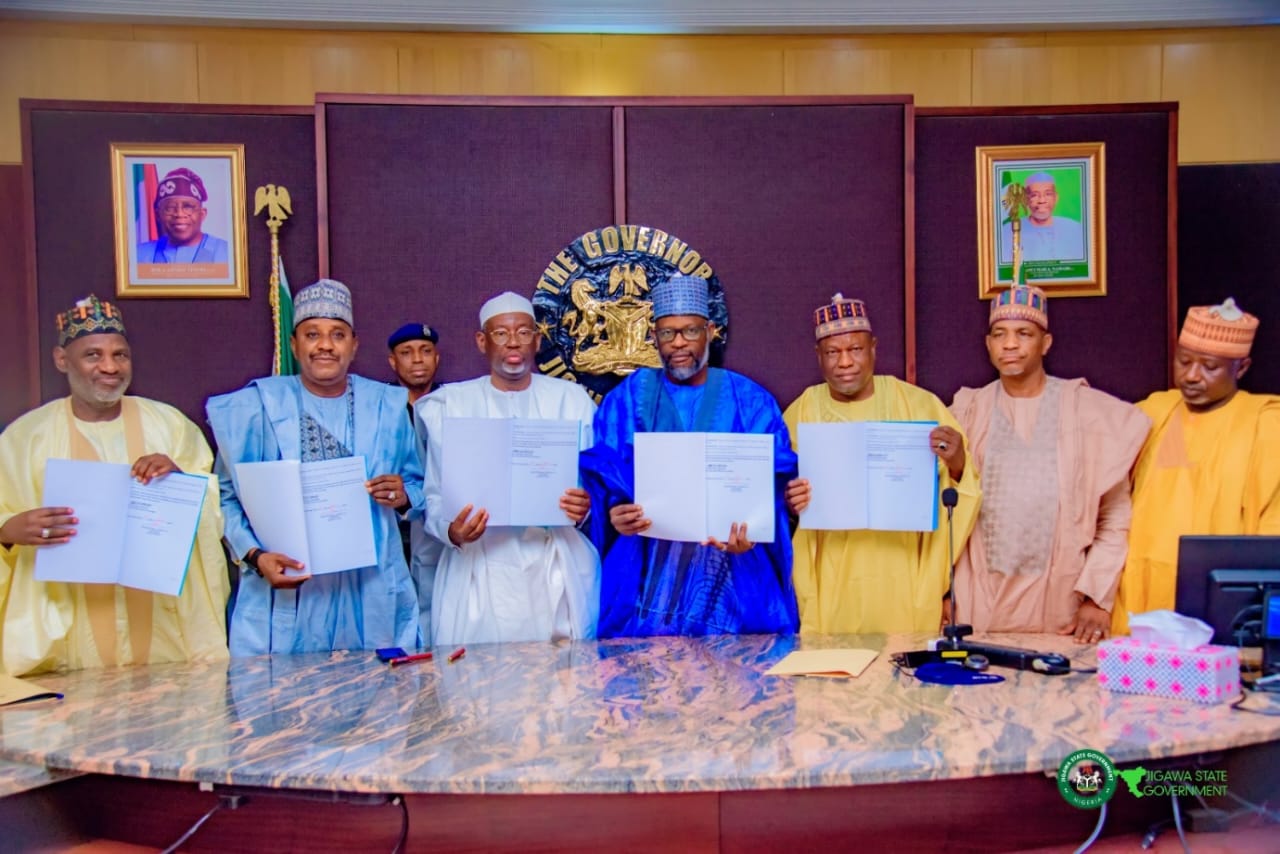
It is against this backdrop that the Jigawa State Polling Unit Development Fund Law, 2026 emerges as a potentially transformative governance initiative — one that attempts to move development from distant administrative structures to the very foundation of democratic participation: the polling unit.
At its core, the law represents a deliberate effort to institutionalize community-driven development by creating a dedicated funding mechanism for grassroots projects across polling units in Jigawa State. More importantly, it reflects a growing recognition that sustainable governance is not merely about allocating public resources, but about involving citizens directly in identifying, managing, and protecting development priorities.
Understanding the Logic Behind the Law
Under the newly enacted law, a Polling Unit Development Fund is established to support development activities at the polling unit level across the state. The structure is straightforward but significant in implication.
The fund is to be jointly financed through monthly contributions from the State Government and the Local Governments, with the state contributing 30 percent and local governments contributing 70 percent. Each polling unit is guaranteed a minimum monthly allocation of ₦200,000, while the law also provides that the funds shall be distributed equally among polling units across the state. To many observers, the most striking aspect of the initiative is not merely the allocation itself, but the choice of the polling unit as the operational base for development intervention.
Traditionally, polling units in Nigeria are viewed only through the lens of elections. They are temporary democratic spaces activated during voting exercises and largely forgotten afterward. Jigawa’s new law attempts to redefine that concept by transforming polling units into permanent platforms for community engagement and local development planning.
In practical terms, this means that development is no longer seen solely as a top-down process controlled by distant government institutions. Instead, communities themselves become central actors in determining priorities, implementing projects, and monitoring outcomes. This is a notable departure from the conventional culture of governance where communities often wait passively for interventions from Abuja, the state capital, or local government headquarters.
Why Grassroots Development Matters
One of the enduring lessons from development practice worldwide is that communities tend to protect and sustain projects they genuinely participate in creating. A borehole constructed without community involvement may quickly fall into disrepair. A classroom project imposed externally may suffer neglect. But when citizens contribute to identifying needs, monitoring execution, and overseeing maintenance, the sense of ownership changes dramatically.
This is precisely where the Jigawa model becomes strategically important.
Across rural Nigeria, many communities struggle with small but critical infrastructure deficits that do not necessarily require billion-naira interventions. Sometimes, modest and timely projects can significantly improve living conditions. A repaired culvert can reconnect farmers to markets.
A functional borehole can reduce waterborne diseases. Minor support to a primary healthcare centre can improve maternal care. Small educational interventions can enhance learning outcomes.
The challenge has often been that such local needs are too small to attract large-scale government attention, yet too important to ignore.
By allocating guaranteed monthly funding directly to polling units, the law attempts to bridge this governance gap.
More importantly, it potentially reduces bureaucratic delays associated with centralized project approvals. Communities can identify urgent needs and respond faster within their local context.
A Governance Shift Beyond Infrastructure
Beyond physical projects, the law represents something deeper: a restructuring of democratic participation itself.
The establishment of Polling Unit Committees, Local Government Steering Committees, and a State Steering Committee introduces a layered governance structure intended to combine local participation with institutional oversight.
The composition of these committees is particularly noteworthy.
The law specifically provides for inclusion of women, youth, traditional institutions, community-based organizations, persons with disabilities, and religious leaders in the polling unit committees. This is not merely symbolic representation. It reflects an understanding that inclusive governance produces broader legitimacy and stronger community acceptance.
In societies where exclusion often fuels distrust and weakens participation, inclusive representation becomes an important stabilizing factor.
Equally important is the provision that communities with multiple polling units may jointly undertake development projects. This introduces flexibility and encourages inter-community cooperation rather than unhealthy competition for resources.
In many respects, the law appears to borrow from modern participatory governance principles increasingly adopted across parts of the developing world — where citizens are not treated merely as beneficiaries of governance, but as co-owners of development processes.
Addressing Concerns About Accountability
Predictably, whenever public funds are decentralized, concerns about accountability arise. Nigerians have seen too many well-intentioned programmes weakened by poor implementation, political interference, or lack of transparency.
The framers of the law appear aware of this reality.
Several accountability safeguards are built into the framework. Polling Unit Committees are required to submit monthly progress reports and accounts of their activities for audit purposes. Oversight structures exist both at the local government and state levels. The State Steering Committee is empowered to monitor compliance, approve implementation guidelines, and ensure equitable distribution of resources.
The law also grants authority for removal of committee members on grounds such as corruption, incompetence, or misconduct. In addition, the Governor retains powers to dissolve committees where necessary upon recommendation from the Local Government Steering Committee.
These provisions are important because no governance reform can succeed without public confidence in accountability mechanisms.
Still, the true test will not lie merely in the text of the law, but in the culture of implementation that follows. Transparency must not remain a legal phrase buried in official documents. Communities themselves must become active monitors of the process.
Citizens must ask questions.
Community leaders must insist on proper reporting. Civil society organizations and the media must sustain scrutiny. That is how democratic accountability matures.
The Economic and Social Implications
If properly implemented, the long-term implications of the initiative could extend beyond immediate infrastructure delivery.
First, grassroots economic activity may receive a modest but important boost. Small-scale projects often generate local employment opportunities, support artisans, and stimulate microeconomic circulation within communities.
Second, the initiative could strengthen public trust in governance. One of the major drivers of political frustration in many communities is the perception that government exists only during elections. When citizens begin to see visible and regular development activity connected to their own participation, democratic legitimacy may deepen.
Third, the law could gradually reduce feelings of neglect among remote communities. Equal allocation across polling units sends an important message that development should not be determined solely by political influence, population concentration, or proximity to urban centres.
In a country where uneven development often fuels social dissatisfaction, this principle carries considerable political and social significance.
The Renewed Hope Dimension
The broader philosophical context of the law also deserves attention. At the national level, President Bola Ahmed Tinubu’s Renewed Hope Agenda places strong emphasis on inclusive growth, grassroots economic participation, and strengthening governance delivery mechanisms. While implementation realities vary across the federation, the underlying philosophy stresses that governance must ultimately improve everyday life for ordinary citizens.
The Jigawa initiative aligns closely with that orientation.
Governor Malam Umar A. Namadi’s administration has consistently emphasized grassroots-focused governance and citizen-centered development. The Polling Unit Development Fund Law appears to translate that philosophy into a concrete institutional framework. Rather than concentrating solely on large signature projects, the law acknowledges an often-overlooked reality: meaningful governance is also measured by small but impactful interventions that directly affect daily living conditions. In many ways, the law reflects an attempt to democratize development itself.
A Test of Collective Responsibility
Ultimately, however, no law, no matter how well designed can succeed in isolation. The future of the Polling Unit Development Fund will depend heavily on collective responsibility. Government institutions must ensure fairness, transparency, and consistency in implementation. Community leaders must rise above partisan interests. Committee members must understand that public trust is a sacred obligation. Citizens themselves must actively participate, monitor projects, and demand accountability.
Development works best when communities see public resources not as government property, but as collective assets requiring collective protection.
That may be the deeper significance of the Jigawa experiment.
At a time when many Nigerians are searching for governance models that reconnect leadership with ordinary citizens, the Polling Unit Development Fund Law offers an interesting proposition: that the path to meaningful national development may actually begin from the smallest democratic spaces.
If carefully implemented and responsibly managed, the initiative may not only transform grassroots governance in Jigawa State, but also provide valuable lessons for other states seeking more participatory and community-driven development frameworks.
In the final analysis, the true strength of democracy is not measured only by elections won or offices occupied. It is measured by whether governance reaches the people where they live, work, and struggle daily.
And sometimes, the most enduring development revolutions begin not from the top — but from the grassroots.
Gujungu, is a Special Assistant to the Jigawa State Governor on social media
